|
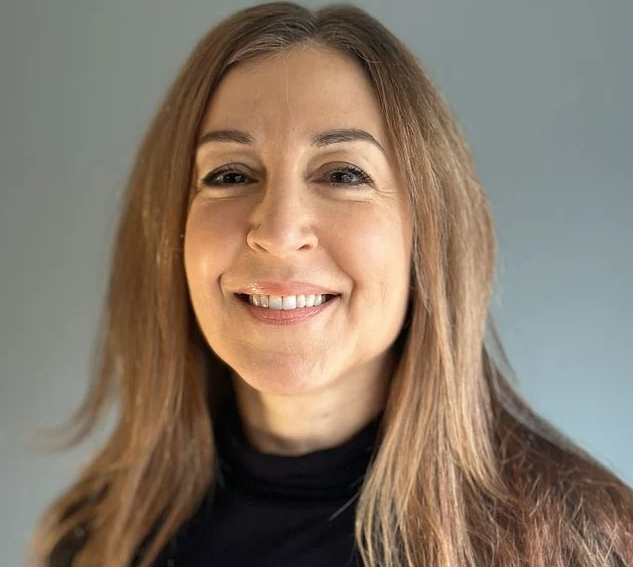
Caterina Valeo's research connects environmental data and modelling with urban water systems: how cities manage stormwater and adapt to a changing climate. A core thread is low impact development (LID), including bioretention, permeable pavements, and rainwater tree trenches, as green infrastructure for stormwater control and climate adaptation. Other work develops uncertainty quantification in hydrology, with fuzzy and entropy-based methods for spatial inputs and model-form uncertainty in infiltration. A parallel thread explores large language models and agentic workflows for reproducible, rapid stormwater analysis, released as open-source software: Agentic SWMM and SWMMCanada.
Latest Research News
CEESD 2026 in Tokyo
The 10th International Conference on Environmental Engineering and Sustainable Development (CEESD 2026), organised by the International Society for Environmental Information Sciences with Sophia University, meets in Tokyo from October 30 to November 1, 2026. Caterina Valeo serves on the International Program Committee. The submission deadline is October 11, 2026.
 CEESD 2026, Sophia University, Tokyo
ICEST 2026 in Xiamen
The 17th International Conference on Environmental Science and Technology (ICEST 2026), organised by the International Society for Environmental Information Sciences with Jimei University and the United Nations Development Programme, meets in Xiamen, China, from December 4 to 6, 2026. Caterina Valeo serves on the Technical Committee and will attend; the group has presented at ICEST in earlier years.
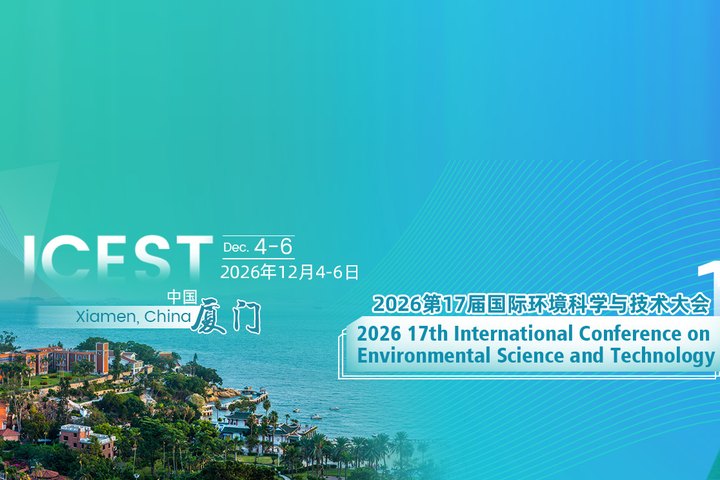 ICEST 2026, Xiamen, China
Agentic SWMM Published in AI for Engineering
Zhang and Valeo's paper on an auditable, reproducible stormwater modelling workflow with Agent Skills and the Model Context Protocol is out in AI for Engineering. The open-source runtime behind it, aiswmm, reached stable v0.9.3 in August 2026 and can be tried in the browser.
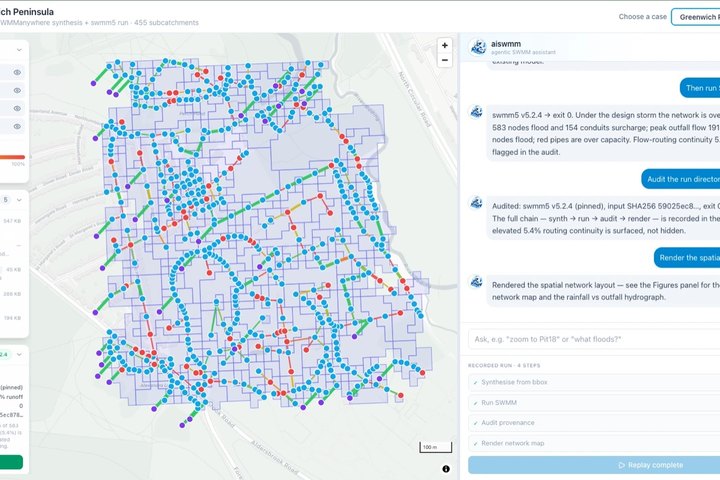 Agentic SWMM in AI for Engineering
SWMMCanada: Draw an Area, Get a SWMM Model
A new open-source service from the group turns a boundary drawn anywhere in Canada into a ready-to-run EPA SWMM model from open data, using the real storm networks of 35 cities and synthesised networks elsewhere. Version 0.5.0 is live, with a preprint on EarthArXiv.
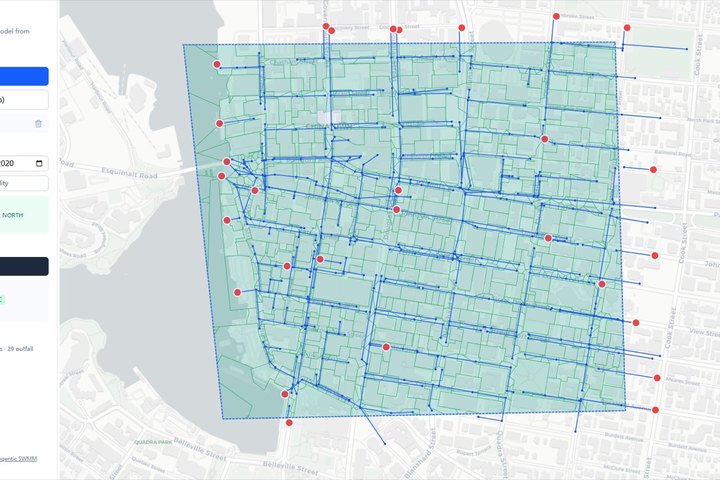 SWMMCanada: draw an area, get a model
Entropy-Based Infiltration Model-Form Uncertainty
Oral presentation on how infiltration model choice contributes to hydrologic uncertainty, extending recent fuzzy-entropy research in runoff and flow prediction.
EGU General Assembly 2026Entropy-based quantification of infiltration model-form uncertaintyVienna · Oral presentation · May 2026Infiltration model-form uncertaintyInvited Keynote at CEESD 2025
Caterina Valeo was an invited keynote speaker at CEESD 2025, the 9th International Conference on Environmental Engineering and Sustainable Development, held in Sanya, China, on December 5 to 7, 2025.
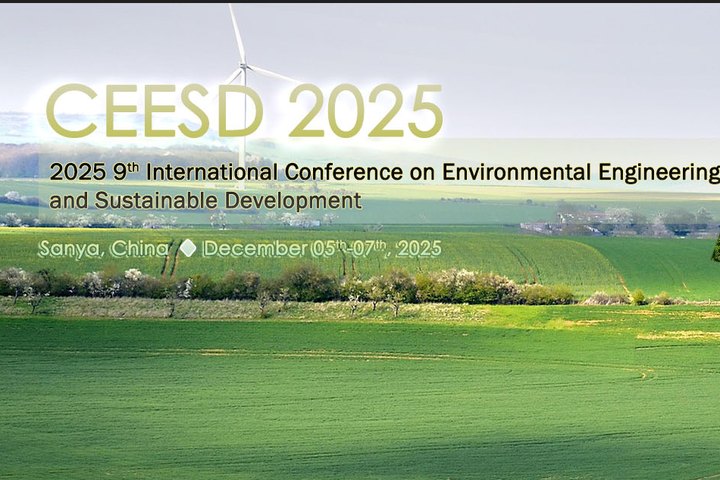 Invited keynote at CEESD 2025
Nutrient Leaching Dynamics in Bioretention Systems
Recent paper on how design parameters and their interactions affect nutrient leaching in bioretention systems.
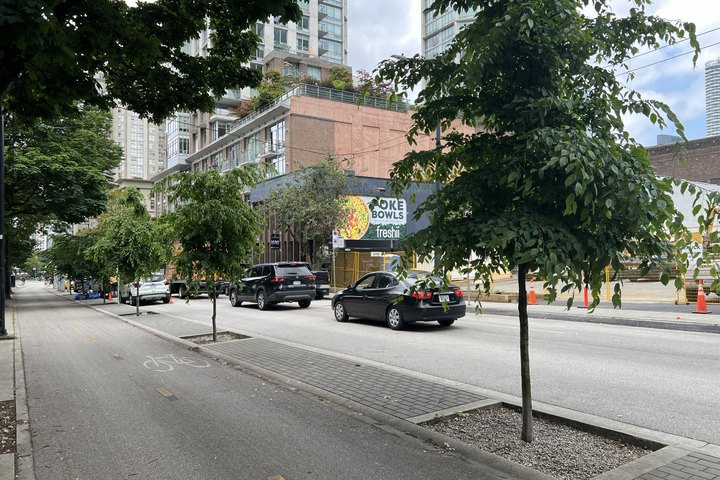 Nutrient leaching in bioretention systems
Quantifying Uncertainty in Flowrate Modelling
Journal article introducing a spatially defined fuzzy-entropy framework to quantify watershed-scale uncertainty in flowrate modelling.
Journal of HydrologyQuantifying uncertainty in flowrate modelling using spatially defined fuzzy entropyVolume 664 · 2025Fuzzy entropy for flowrate uncertaintyKeynote at the 38th Eastern Canadian Symposium on Water Quality Research
Caterina Valeo gave a keynote at the 38th Eastern Canadian Symposium on Water Quality Research, hosted by the Canadian Association on Water Quality and Concordia University in Montreal on October 17, 2025, pictured with fellow speakers and organizers.
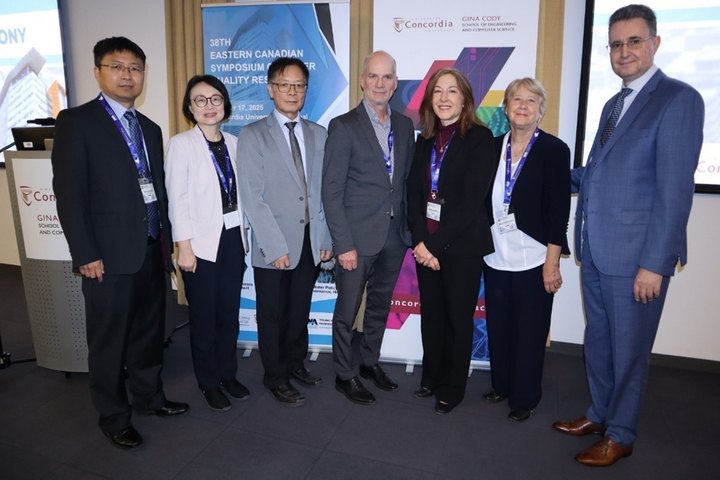 Keynote, Eastern Canadian Symposium on Water Quality Research
Treed Bioretention and Senescence
Recent study on how the senescence growth phase affects the performance of treed bioretention cells.
Ecological EngineeringConsequences of the senescence growth phase on the performance of treed bioretention cellsVolume 224 · 2026Treed bioretention and senescenceAgentic Modelling Pipeline for Stormwater Systems
Preprint on a reproducible rapid stormwater modelling workflow using OpenClaw, reflecting the group's current work on agentic and automated modelling pipelines.
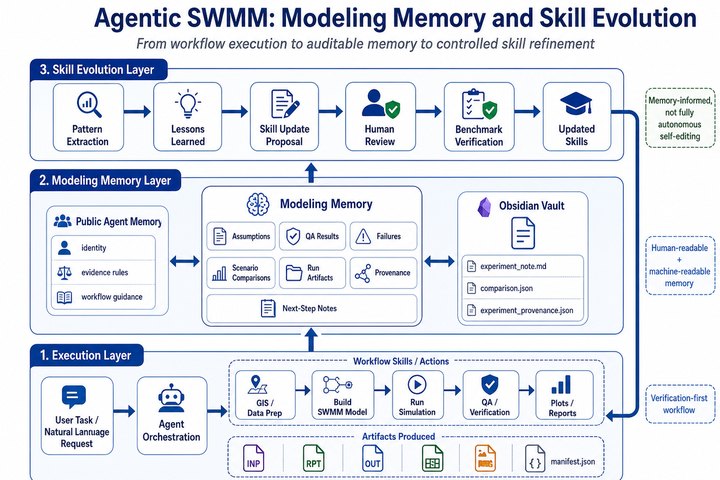 Agentic modelling pipeline with OpenClaw
Indirect Impacts of Flooding on Traffic
Recent paper assessing the temporal qualities of indirect flooding impacts on transportation systems.
International Journal of Disaster Risk ReductionAssessing the temporal qualities of indirect impacts of flooding on trafficVolume 135 · 2026Indirect impacts of flooding on trafficPhilip H. Jones Award for Best Young Water Professional
Zhonghao Zhang, Ph.D. candidate in the group, received first place in the Philip H. Jones Award at the 2025 CAWQ Atlantic Symposium in St. John's for his presentation on quantifying uncertainty in urban hydrological models and AI-based prediction in the Saanich area.
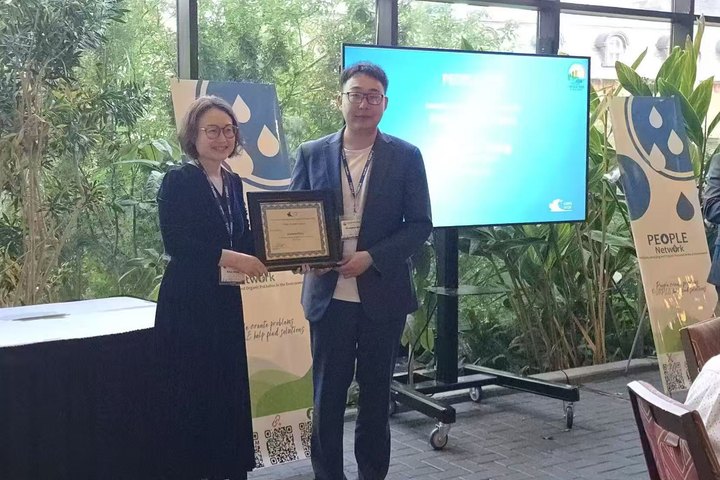 Philip H. Jones Award, best young water professional
Fuzzy-Based ChatGPT for Peak Flow Prediction
Study comparing fuzzy-based deterministic hydrologic methods with ChatGPT outputs for peak-flow prediction under uncertain inputs.
Journal of Hydrology XFuzzy-based input method for uncertainty quantification compared with ChatGPT for peak flow predictionVolumes 28 and 29 · 2025Fuzzy inputs vs ChatGPT for peak flow
Research at a glance
The group studies how cities handle water under a changing climate. The work spans field monitoring, laboratory studies, and computational modelling, and brings environmental data into urban water and infrastructure decisions.
Climate adaptation and green infrastructure
Low impact development practices such as bioretention cells, permeable pavements, and rainwater tree trenches, and how they reduce runoff and urban heat.
Bioretention, water quality, and monitoring
Nutrient leaching and metal removal in treatment media, with field monitoring and sensing of vegetated green infrastructure.
Hydrologic uncertainty and urban systems modelling
How uncertainty in spatial inputs affects runoff prediction, including fuzzy-entropy methods and reproducible stormwater modelling workflows.
Contact
valeo@uvic.ca · (250) 721-8623
EOW Room 503